TOKO GRANIT TILE & TOKO BAHAN BANGUNAN BANJARMASIN
TOKO GRANIT TILE & TOKO BAHAN BANGUNAN BANJARMASIN

- Artikel | 31 July 2019
The increasingly depressing condition of the earth every day reminds us of the dangers of global warming and the human contribution to this drastic change in weather. Turning to environmentally friendly materials, for example patchwork shopping bags, bamboo straws, or wooden cutlery, can be one way to show our love for the earth where we live.
Not only for everyday needs, environmentally friendly materials can also be used to build houses. In addition to helping reduce the contribution to global warming, housing also feels cooler and more natural. Intrigued by environmentally friendly materials that you can use for natural occupancy? Come on, see the list below.
1. Straw, protection from heat and noise
Although straw has actually been used for a long time to cover parts of the roof, lately straw has become increasingly popular as an environmentally friendly material, especially for walls. With prices that are cheap and easily found on the market, straw is placed in the space between the column and the beam frame.
This environmentally friendly material is a good heat insulator and also functions as a silencer. Thus, residential owners will not easily feel hot during the day and can relax without outside noise.
2. Mild steel, tough anti-slip material
In ancient times, people built houses using wood as a roof frame and window frame. However, wood cannot be considered an environmentally friendly material because the increasing demand for timber results in mass deforestation.
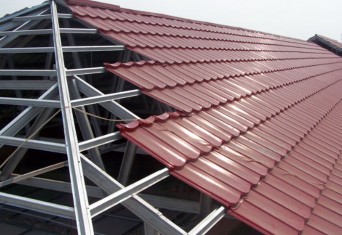
Alternatively, you can use a lightweight steel roof truss that is no less powerful than wood. As an environmentally friendly material, mild steel can also be recycled many times, and will save maintenance costs because it does not need anti-vapor drugs.
3. Bamboo, looks strong and aesthetic
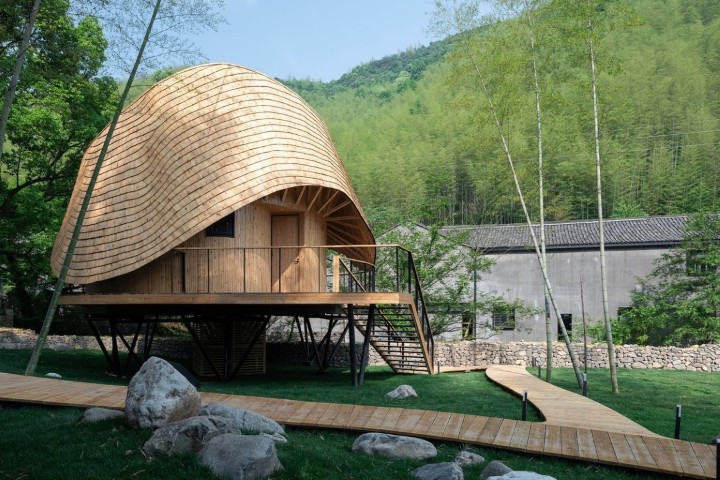
Apart from mild steel, there is also bamboo material as an environmentally friendly material instead of wood. One of the more popular environmentally friendly materials, bamboo itself has been known since ancient times and is often used because it is very strong in supporting heavy loads, although the weight of the bamboo is light.
These panda-like plants also grow quickly in the wild, so there is no concern about reduced bamboo stocks. Not only being an environmentally friendly material, bamboo plants can also increase the aesthetic value of a building.
4. Compacted land, techniques from ancestors
Have you ever thought of utilizing land compacted as an environmentally friendly material to build a house? In fact this technique has been applied by our ancestors thousands of years ago and proved that this material is durable.
Compressed soil is used as an environmentally friendly material instead of concrete, whose quality and strength are no less competitive. The house will feel cooler and natural.
5. Hempcrete environmentally friendly material
Regarded as an environmentally friendly material, hempcrete is a modern concrete made using hemp plant fibers. The plant fiber is mixed with lime so that the dough shape resembles ordinary concrete.
Its weight is lighter, but strong to withstand heavy loads. Hempcrete is referred to as an environmentally friendly material because there is a large supply of hemp plants in the wild, caused by the rapid and sustainable growth of hemp plants.
6. Ashcrete's environmentally friendly material
Furthermore, there is an environmentally friendly material innovation called ashcrete. As the name implies, Ashcrete is made using fly ash which is the product of coal combustion. The presence of Ashcrete is said to be able to replace the use of traditional cement and its adhesive strength is very strong.
Please consider a number of eco-friendly materials before you build a house, for the sake of the beauty of the environment and also comfort while living in a house property.
artikel blog arsimetris djaja lainnya